Archives
- 2026-10
- 2026-09
- 2026-08
- 2026-07
- 2026-06
- 2026-05
- 2026-04
- 2026-03
- 2026-02
- 2026-01
- 2025-12
- 2025-11
- 2025-10
- 2025-09
- 2025-04
- 2025-03
- 2025-02
- 2025-01
- 2024-12
- 2024-11
- 2024-10
- 2024-09
- 2024-08
- 2024-07
- 2024-06
- 2024-05
- 2024-04
- 2024-03
- 2024-02
- 2024-01
- 2023-12
- 2023-11
- 2023-10
- 2023-09
- 2023-08
- 2023-06
- 2023-05
- 2023-04
- 2023-03
- 2023-02
- 2023-01
- 2022-12
- 2022-11
- 2022-10
- 2022-09
- 2022-08
- 2022-07
- 2022-06
- 2022-05
- 2022-04
- 2022-03
- 2022-02
- 2022-01
-
br Acknowledgements br Introduction Benzodiazepine BZ
2022-09-21
Acknowledgements Introduction Benzodiazepine (BZ) treatment is widely used for quick and efficient anxiolytic and sedative responses. However, when the use is extended to longer periods, adverse effects emerge. These include tolerance to the initial drug effect, dependence as revealed by withd
-
br Summary br Acknowledgement br GR A Nuclear
2022-09-21
Summary Acknowledgement GR: A Nuclear Receptor with Widespread Physiological Impact GR, or NR3C1 (see Glossary), is a transcription factor (TF) that regulates gene expression in nearly every cell of the body. A member of the nuclear receptor (NR) superfamily, its ligand-binding domain confe
-
The Hedgehog Hh pathway is linked
2022-09-21

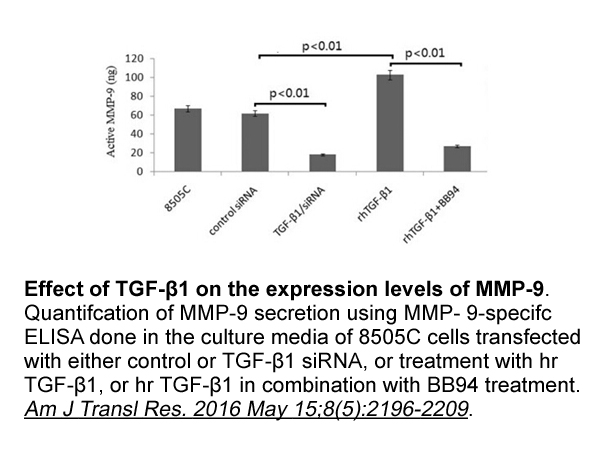
The Hedgehog (Hh) pathway is linked to the development of several types of epithelial cancers (Rubin and de Sauvage, 2006). A paracrine mechanism has been implicated in CAF activation, with Hh ligands secreted by cancer cells activating the glioma-associated transcription factors (Gli) in surroundin
-
TMN 355 mg Regulation of FGF signalling is critical to
2022-09-21
Regulation of FGF signalling is critical to ensure a balanced response to receptor stimulation. This occurs largely through negative feedback mechanisms, including receptor internalisation via ubiquitination (Wang et al., 2002) and induction of negative regulators, for example SPRY, SPRED 1 and 2 an
-
The fibroblast growth factor receptor FGFRs including four
2022-09-21
The fibroblast growth factor receptor (FGFRs), including four highly conserved proteins (FGFR1-4), are important membrane sensors for extracellular signals [4]. By binding to their ligands, FGFRs are activated and can trigger various downstream intracellular signaling cascades, which is required for
-
Glutathione in reduced form GSH the tripeptide glutamyl cyst
2022-09-20
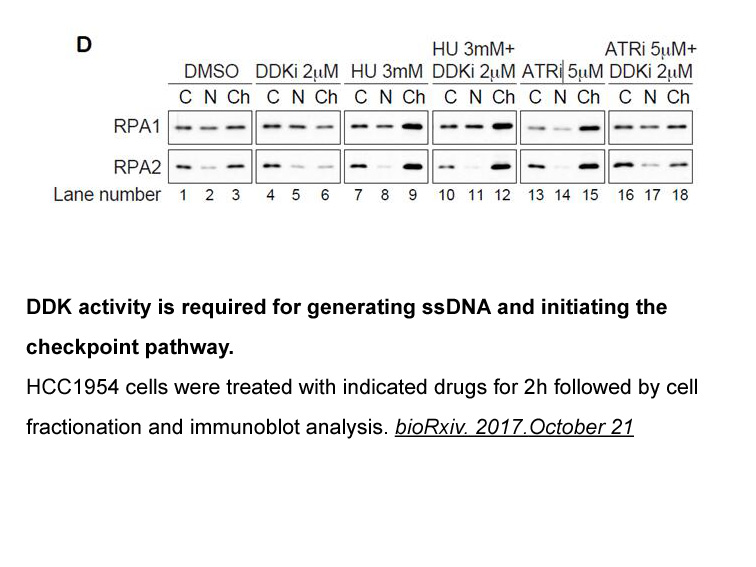
Glutathione in reduced form (GSH, the tripeptide, γ-glutamyl cysteinyl glycine) is a non-enzymatic low-molecular-weight antioxidant necessary for the maintenance of a cellular redox state (Noctor et al., 2012). At the stage of the transition from germination to seedling growth the process of cell di
-
IL had marked effects on
2022-09-20
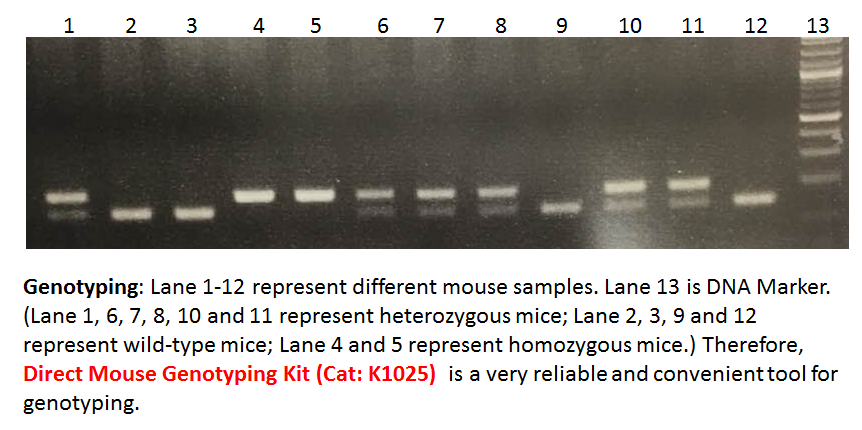
IL-33 had marked effects on the inflammatory response in human adipocytes beyond GPR84, with a substantial stimulation of the expression of a selected group of cytokine and chemokine genes. Expression of IL1B, a co-member of the IL-1 superfamily, was strongly up-regulated by IL-33, as was IL6 and CX
-
Elevated methylglyoxal levels also contribute to carbonyl st
2022-09-19

Elevated methylglyoxal levels also contribute to carbonyl stress, cytotoxicity, DNA damage, apoptosis and cell death. These mechanisms may be important for normal aging of the nervous system as well as for the development of neurodegenerative diseases such as Alzheimer's and Parkinson's disease wher
-
Kern et al observed an overall improvement in behaviors
2022-09-19
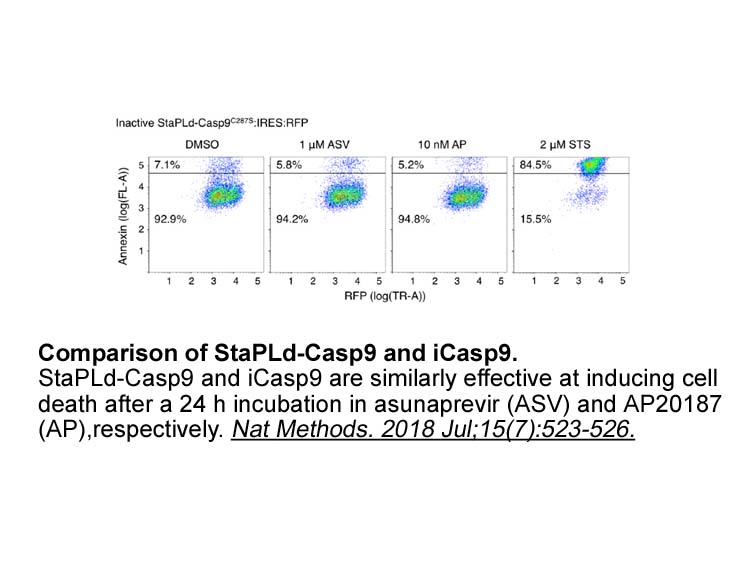
Kern et al observed an overall improvement in behaviors typical for autism during TR. They used the Childhood Autism Rating Score (CARS), to determine the intensity of the change and found lower CARS values after 3 (t(21) = 2.73, p but SU6656 comparison of differences in QoL improvement in both grou
-
br Conflict of interest br Transparency document br
2022-09-17

Conflict of interest Transparency document Acknowledgements We acknowledge our funding sources from the American Heart Association (13EIA4480016) and the National Institute of Health/National Heart, Lung, and Blood Institute (RO1 HL094414). We are very grateful to Dr. Shaohua Xiao and Dr. S
-
Cytokines and hormones influence both
2022-09-17

Cytokines and hormones influence both gap junctions [106] and endocrine activity in the pituitary [3]. Long-term treatment (2 h) with the proinflammatory cytokines interleukin-1β (Il-1β) and tumor necrosis factor-α (TNF-α) transiently increases Cx43 expression and cell coupling in TtT/GF hydrocort
-
The focused set of cyclopentapyrazoles
2022-09-17
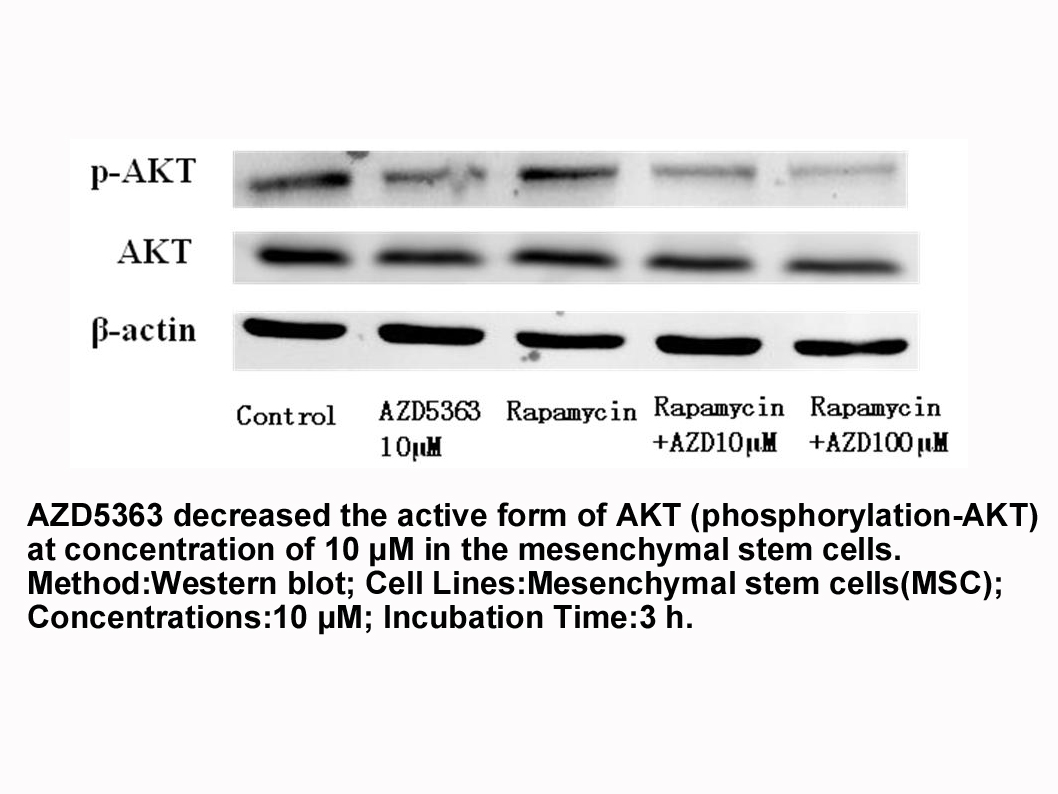
The focused set of cyclopentapyrazoles produced six compounds with sufficient activity to warrant the evaluation of kinetic solubility. Despite the improved activity of the series, these compounds remain stalwartly insoluble (), indicating the need for additional chemical modifications which address
-
Studies have indicated that formylated peptides
2022-09-17
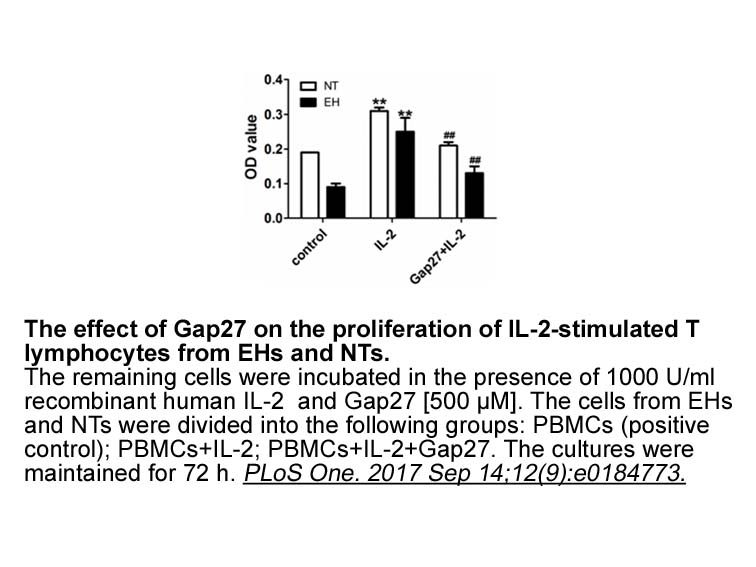
Studies have indicated that formylated peptides, FPRs, and in particular FPR-1 may be principal conductors in inflammatory processes in sterile-24, 26 and infection-related diseases. FPR-1 and formylated peptides, which are active components of CS, have been involved in smoking-induced lung damage,
-
Several classes of small molecule inhibitors of FBPase
2022-09-17
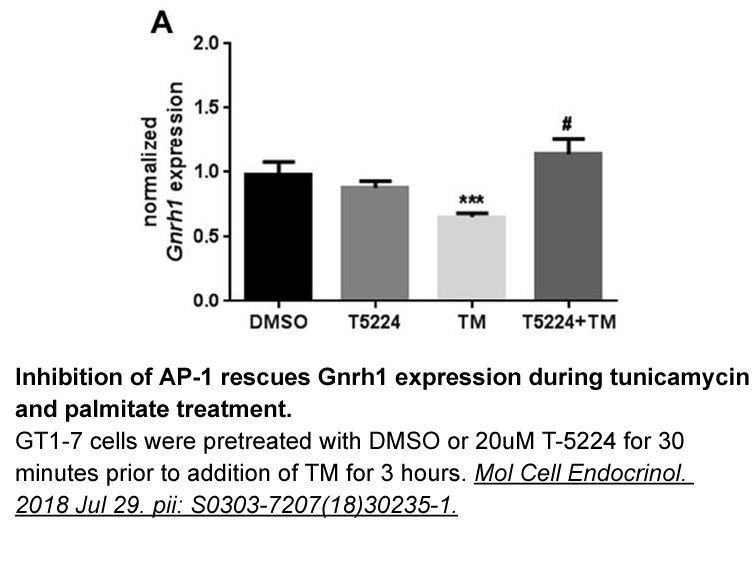
Several Nilotinib monohydrochloride monohydrate of small-molecule inhibitors of FBPase have been reported. These inhibitors can be structurally classified into two groups; non-phosphorus-based inhibitors and phosphorus-based inhibitors. In the former group, several chemotypes including anilinoquina
-
WT associated protein WTAP a nuclear
2022-09-17
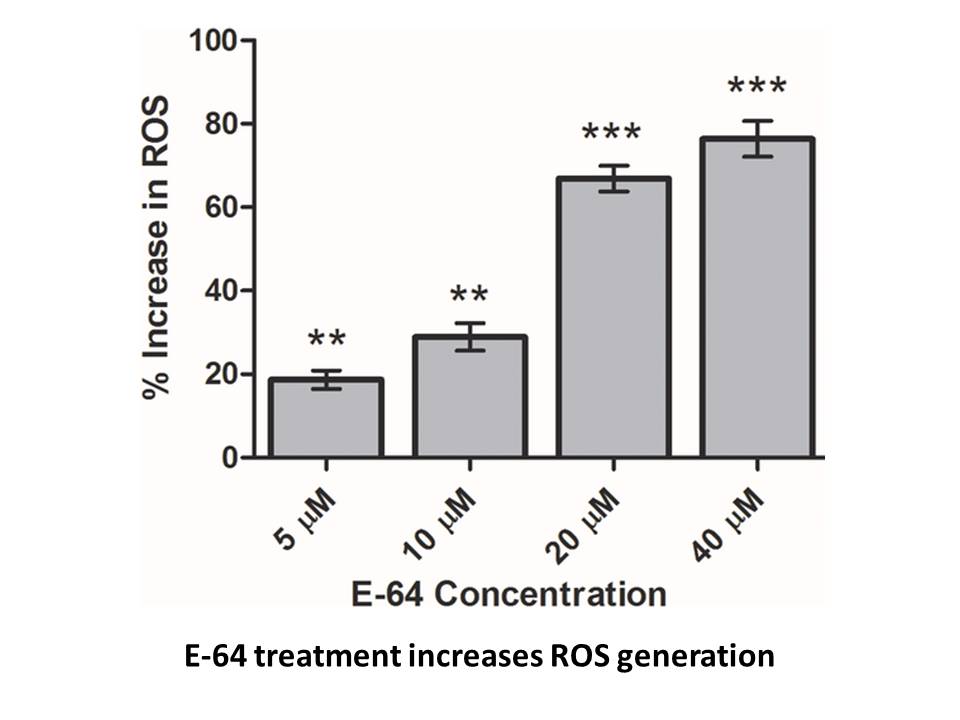
WT1 associated protein (WTAP), a nuclear protein, is first identified by Little [6] who noticed its specific interaction with WT1. Besides several essential physiological processes, such as mRNA stabilization [7], eye development [8], m6A methylation [9], mRNA alternative splicing [10] and Semaxanib
8136 records 402/543 page Previous Next First page 上5页 401402403404405 下5页 Last page